The evidence
What moringa does — and what it does not
Moringa has an unusually wide gap between what is claimed for it and what has been demonstrated. This page is our attempt to set that out honestly, including the parts that do not help us sell anything. Everything here is referenced at the bottom.
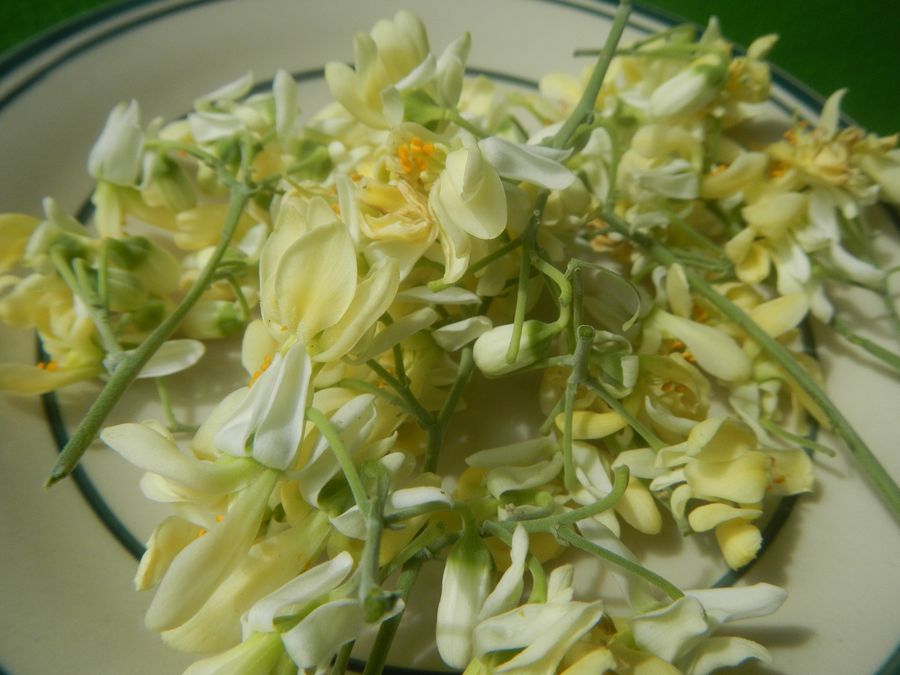
What is in the leaf
This part is well characterised and not controversial. Dried moringa leaf is a genuinely nutrient-dense plant food. Broad published ranges for the dried leaf:
| Protein | ~25 g per 100 g dried leaf |
|---|---|
| Dietary fibre | ~25 g per 100 g dried leaf |
| Minerals | Meaningful iron and calcium |
| Vitamins | A, C and E |
| Polyphenols | Quercetin and kaempferol; measured phenolics in later-stage leaf run quercetin 21.6 mg/kg > benzoic 13.0 > ferulic 8.9 > sinapic 3.4 > gallic 2.9 > p-coumaric 1.6 |
| Glucosinolates | Converted on chewing and digestion to isothiocyanates, including moringin. Relevant to both the flavour and the thyroid caution below. |
| Antinutrients | Relatively low in saponins, phytate and tannins compared with many other leafy sources |
What a daily dose actually delivers
This is the number most moringa sellers leave out, and it matters. Capsules are convenient, but they hold very little.
| A 500 mg capsule | 0.5 g leaf powder |
|---|---|
| Three capsules a day | 1.5 g leaf powder — about 0.4 g protein and 0.4 g fibre |
| A level teaspoon of powder | ~2.5 g |
| Doses used in published trials | 8–30 g a day, typically as loose powder stirred into food |
What the research supports, by strength
Nutritional composition and food safety of the leaf
That moringa leaf is nutrient-dense, that it has a long history of food use across South Asia, South-East Asia and Africa, and that it contains the polyphenols and glucosinolates listed above — all of this is solid, repeatedly measured, and not seriously disputed. If you want a reason to eat moringa, this is the honest one: it is a nutritious leaf vegetable in a convenient dried form.
Adjunct use in HIV care and in undernutrition
The strongest human trial signal is not in healthy adults. Randomised trials of 10–30 g/day of leaf powder over six to twelve months in people living with HIV on antiretroviral therapy have reported increases in CD4+ counts and body mass index versus control, and moringa was consistently well tolerated. This is a supervised clinical context with a specific population, and it does not transfer to a general consumer taking three capsules a day.
Blood sugar, cholesterol, blood pressure and weight in the general population
This is where most marketing lives, and where the evidence is weakest relative to the noise. A 2025 systematic review and meta-analysis pooled nine randomised controlled trials covering 649 participants. It found no statistically significant effect on body weight, BMI or waist circumference; no significant improvement in triglycerides, total cholesterol, LDL or HDL; and no significant effect on most glycaemic measures. A modest diastolic blood-pressure reduction appeared initially but did not survive sensitivity analysis. The authors graded the certainty of evidence for every outcome as very low, citing high risk of bias, heterogeneity above 80%, small samples and short durations. Their conclusion was that current evidence does not support consistent cardiometabolic benefits in adults. Individual trials do report positive results — a 2025 trial of 8 g/day in type 2 diabetes reported lower fasting glucose — but the pooled picture does not yet hold together.
Treating or preventing disease, detoxing, immune boosting, weight loss
There is no basis for any of these as consumer claims, and in the EU making them would be unlawful. Moringa is prohibited in herbal medicinal products; a product that claims to treat, prevent or cure a disease is by definition a medicine and must be authorised as one. Much of the promotional literature also rests on in-vitro and animal work that has not been reproduced in people.
One family of claims you should distrust
You will very often see moringa sold on the line that it has seven times the vitamin C of oranges, ten times the vitamin A of carrots, seventeen times the calcium of milk and nine times the protein of yoghurt. These numbers come from older advocacy literature. They compare dried leaf against fresh foods by weight, which inflates every ratio, and they ignore how much you actually eat. We do not use them, and we would treat any supplier who does as a supplier who has not read their own file.
The downsides, and who should be careful
Moringa leaf is generally well tolerated, and in clinical trials it has had a good safety record. But "generally well tolerated" is not "risk-free for everyone", and a few of these matter more than the internet suggests.
Thyroid conditions and levothyroxine
The glucosinolates in moringa convert to isothiocyanates and thiocyanates, which are recognised goitrogens — they can interfere with the thyroid's iodine handling. Animal work suggests moringa leaf extract may reduce conversion of T4 to T3. When EFSA assessed powdered leaf of the related species Moringa stenopetala as a traditional food, it raised thyroid concerns and concluded it could not determine whether the product was safe. If you have a thyroid condition or take levothyroxine — a drug with a narrow dosing window — speak to your doctor first.
Diabetes medication
Moringa has shown blood-sugar-lowering activity in animal studies and in some human trials. A published case report describes a haemodialysis patient with three months of hypoglycaemia that resolved when moringa was stopped. If you take insulin, metformin or a sulfonylurea, the combination could push blood sugar too low. Monitor, and talk to your prescriber.
Pregnancy and breastfeeding
Data are insufficient. Leaf in ordinary food amounts is generally regarded as acceptable, but concentrated supplement doses have not been adequately studied, and seed extracts have shown reproductive and organ toxicity in animals. We would not recommend supplement-level moringa in pregnancy without medical advice.
Digestive effects
At higher doses moringa can have a laxative effect and cause stomach upset. Start low.
Rare hypersensitivity
Case reports exist of serious reactions to moringa powder, including Stevens–Johnson syndrome and a cutaneous reaction with tongue oedema and respiratory distress. These are rare, but they are documented.
Possible allergen status
EU and UK research has flagged certain moringa leaf proteins as potential novel allergens. Nothing is settled, but we are tracking it and will label accordingly if the position changes.
Root and bark — never
Moringa root and bark contain alkaloids including spirochin and carry real toxicity concerns. They have no place in a consumer product. We sell leaf only. If you see a moringa product listing root or bark for ingestion, do not buy it.
Heavy metals — why we test
Moringa takes metals up from soil, and this is the single most likely route to a product recall in this category. Leaf powders on sale in Cotonou, Benin were measured at lead 0.01–4.263 mg/kg and cadmium 0.093–0.354 mg/kg. Moringa grown on contaminated ground near the old lead–zinc workings at Kabwe, Zambia was calculated as safe only below 1 g a day. EU law caps lead in food supplements at 3.0 mg/kg. This is not a hypothetical: it is why every batch we ship carries a current metals panel.
How to take it
Start small
Begin with one capsule or half a teaspoon a day for a week. It is a strong-tasting leaf and a high-fibre one; give your digestion a chance to adjust.
Take it with food
Better tolerated, and fat-soluble vitamins in the leaf are absorbed better alongside a meal containing some fat.
Do not heat the powder hard
Stir it into food after cooking rather than boiling it. Heat degrades the polyphenols and the colour.
Keep it sealed and dark
Light, air and moisture are what turn bright green powder into dull khaki. Reseal the pouch and keep it out of the sun.
Be consistent rather than heroic
A modest daily amount taken steadily is more useful than an occasional large dose.
References
- Effects of Moringa oleifera Lam. supplementation on cardiometabolic outcomes: a meta-analysis of randomised controlled trials with GRADE assessment
- Moringa oleifera Lamk. as a promising adjunct therapeutic candidate: a narrative review of human studies and published case reports
- Double-blind RCT of moringa leaf powder on immune status and anthropometry in adults with HIV on antiretroviral therapy
- EFSA technical report on powdered leaves of Moringa stenopetala as a traditional food — thyroid objections
- Goitrogenic / antithyroidal potential of moringa leaves on thyroid status in rats
- Moringa oleifera and hypoglycaemia: the causal link (case report, ECE 2024)
- Moringa — LiverTox, NIH Bookshelf
- Lead and cadmium in moringa leaf powders on sale in Cotonou, Benin
- Commission Regulation (EU) 2023/915 — contaminants in food supplements and botanical raw materials
- Nutrient composition of moringa leaves from two agroecological zones in Ghana
- Habitat suitability modelling for Moringa oleifera under current and future climate
- CBI — European market potential for moringa