Single origin · Madura, Indonesia
A tree, an island and a bridge
We grow moringa on a limestone island with six dry months, dry it within hours of picking, test every batch, and ship it to Denmark ourselves. No importers. No brokers. The saving goes to you.
Moringa oleifera leaf · grown, dried, milled and tested at source
Site score on our own seven-criterion framework — a top-handful result worldwide
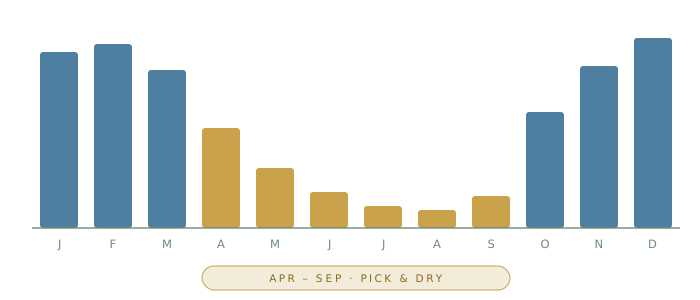
Annual rainfall at Sumenep, inside the 700–2,200 mm optimum for the species
April to September with no rain — the picking and drying window
Frosts ever recorded. Moringa stops growing below about 15 °C at night
The plant
What moringa actually is
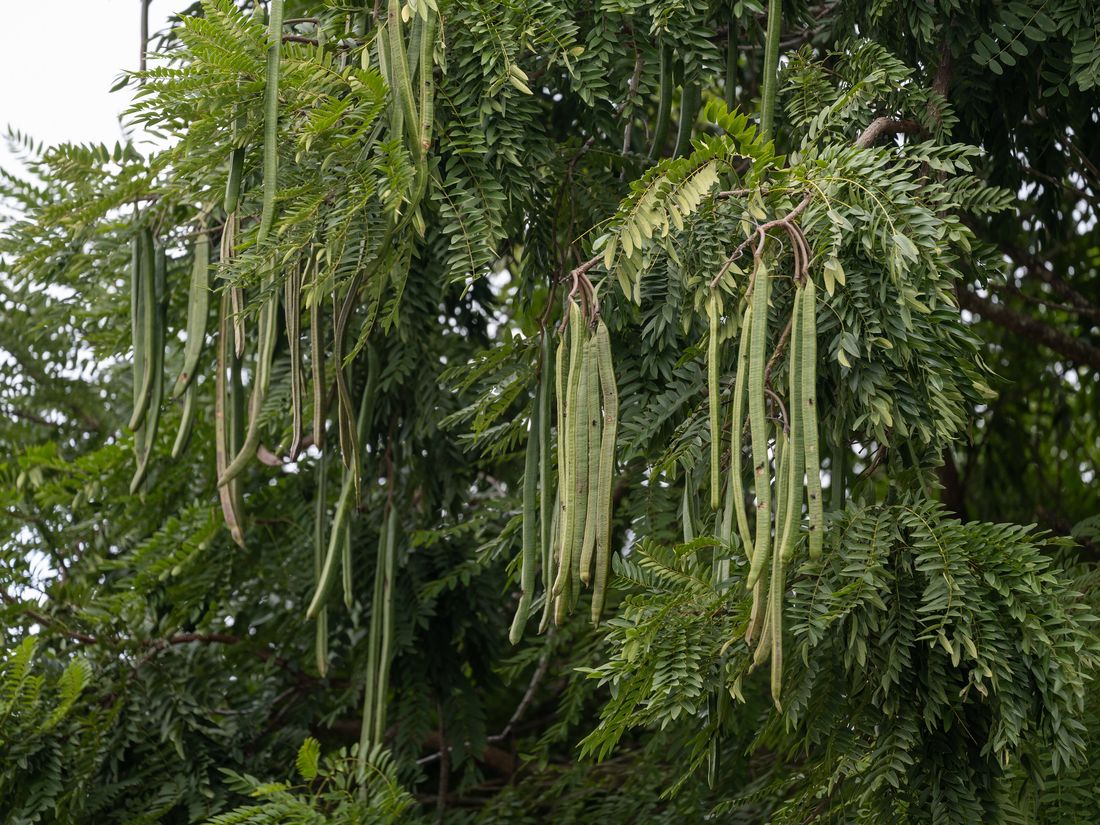
Moringa oleifera is a fast-growing tree native to the sub-Himalayan north-west of India and now grown across the tropics. In Indonesia it is called kelor. In English you will sometimes see drumstick tree, after its long thin seed pods.
It grows extraordinarily quickly — several metres in its first year. Cut the branches back and fresh leaves return within weeks, then again, and again. That regrowth is the whole commercial basis of the crop: it is harvested like a leaf vegetable rather than like a fruit tree.
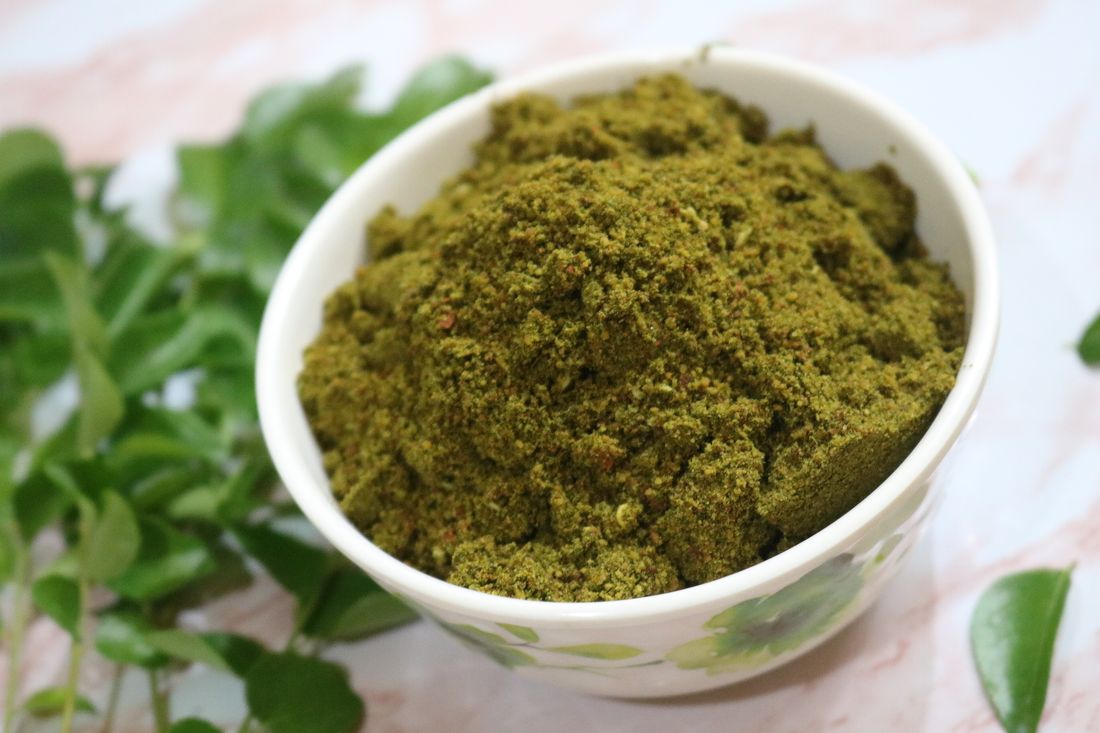
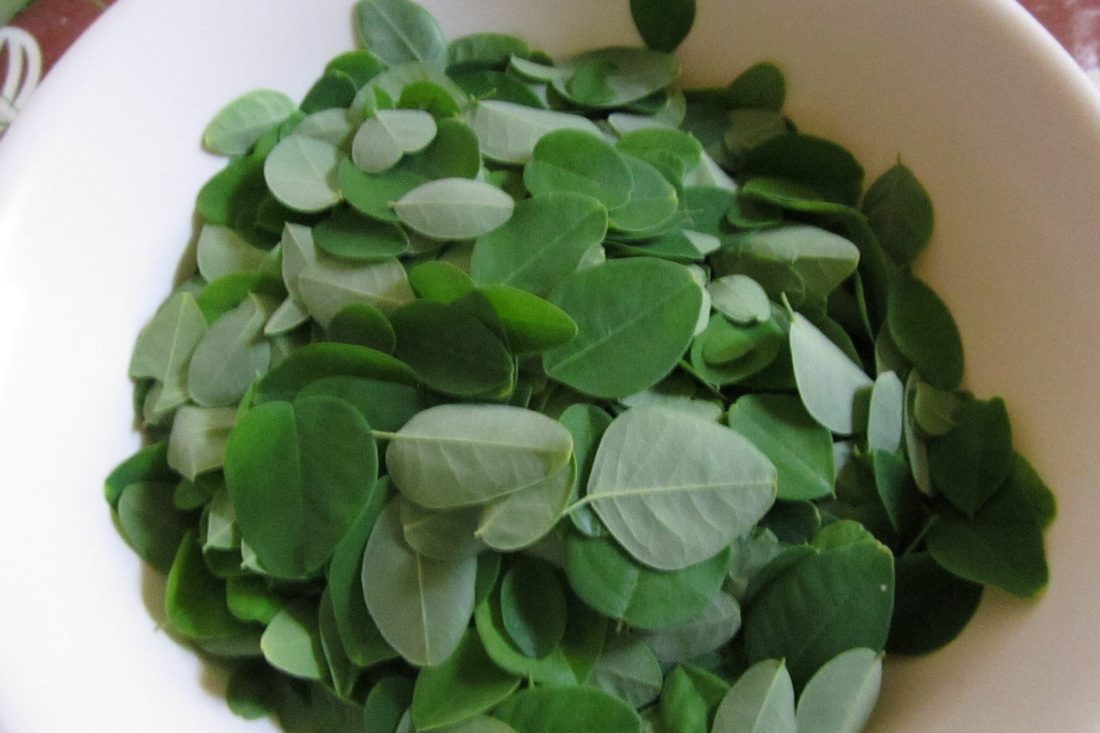
We dry those leaves and mill them into a fine green powder. The powder is the product. Everything therefore depends on two things — the condition of the leaf when it is picked, and how fast it gets dry.
Leaf, not extract
We sell whole dried leaf, milled. In the EU, moringa leaf and leaf powder are authorised foods. Extracts and food-grade seed oil are novel foods needing pre-market authorisation, and we do not sell them.
Harvested young
Leaf maturity at harvest changes composition more than origin does. We pick young leaf on a short cutting cycle rather than maximising biomass.
Dried fast, dried cool
Time from cutting to dryer is the single largest controllable factor in colour, antioxidant retention and microbial load. Controlled low-temperature drying, not open-air on the roadside.
The origin
Why here, and not somewhere else
India supplies roughly 80% of the world's moringa. We are not trying to out-scale it. We picked a place that suits the plant's actual requirements and then built the processing around it.
Moringa has three requirements. Break one and the tree sulks.
Never be cold
Moringa is happiest between about 25 and 35 °C. Below roughly 15 °C at night it stops growing, and frost kills it outright. Madura sits about seven degrees south of the equator and has never recorded a frost. There is no winter to survive.
Rain, then a long dry season
This is the one that surprises people: moringa does not want rain all year. Published habitat modelling finds the most predictive single variable is the mean temperature of the driest quarter — the dry season governs, not the wet one. Madura gets about 1,479 mm a year, and it arrives October to March. Then six dry months.
Never wet feet
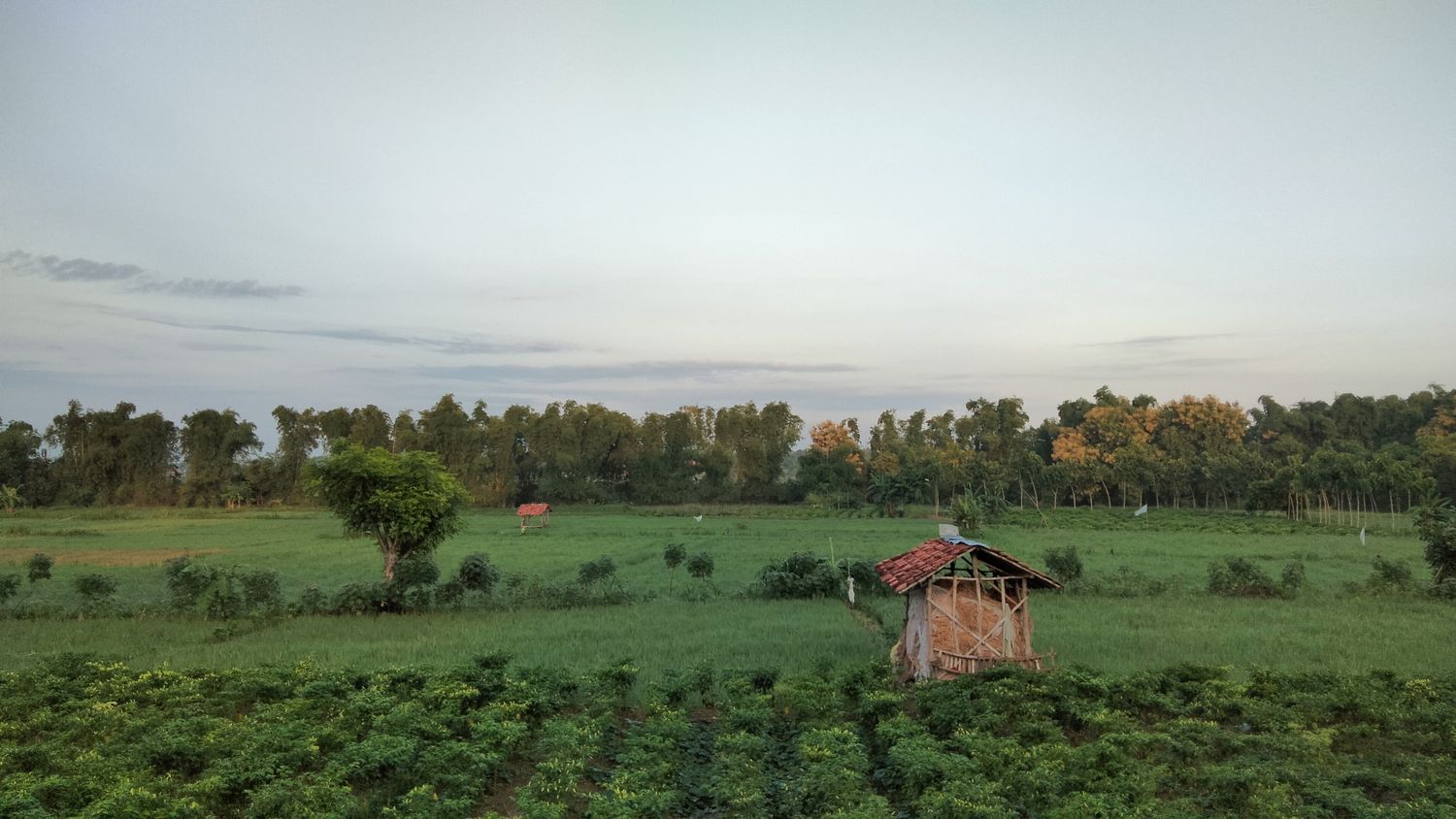
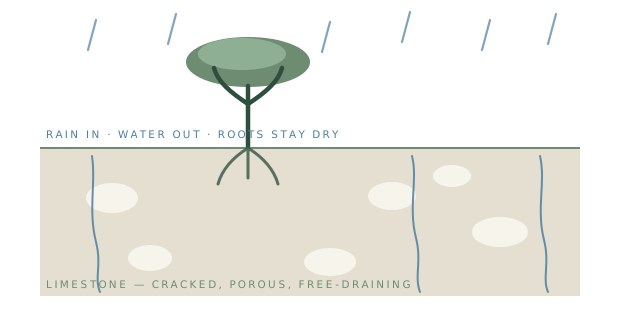
Waterlogged roots rot, and that is the most common way a moringa planting dies. Madura is built on raised limestone — cracked and porous, like a hard sponge. Rain goes straight through. Rain in, water out, roots stay dry.
The origin
The dry season is the product
Six rainless months coincide with harvest. That means lower leaf wetness, cleaner picking, shorter drying times, less mould risk and predictable field access. Wet leaves grow mould, take far longer to dry and lose their colour. The dry season is not something we tolerate — it is the reason the powder comes out bright green rather than dull brown.
Two blocks that fail in opposite directions
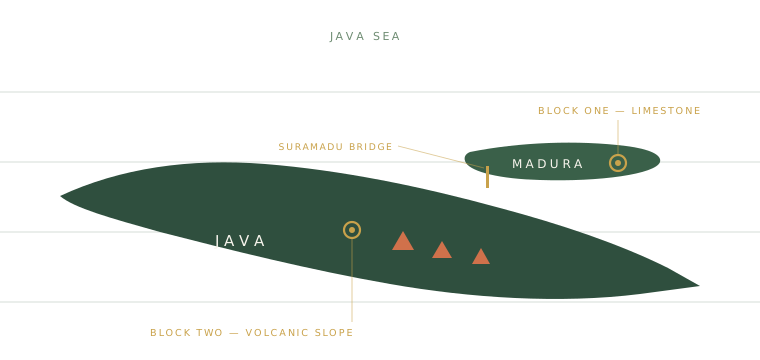
We run two production sites, and they are complementary rather than redundant. Madura is a raised limestone platform: excellent drainage, a pronounced dry season, a clean contaminant profile, but naturally low soil fertility that we have to build. The East Java block sits on a volcanic slope: outstanding soil structure, high water-holding capacity and genuine mineral replenishment from ashfall, but a shorter dry season and a phosphorus-availability problem.
Madura is our flagship leaf and leaf-powder block. The volcanic slope covers regrowth consistency and seasonal supply. We keep them as separate traceable streams and do not blend them.
What we will not claim
You will see moringa sold on volcanic-mineral stories. We are not going to make that argument, because the published evidence does not support it. Comparisons between growing origins show weak differences — a Ghanaian study across two agroecological zones found crude protein of 26.5% versus 25.7%, which is not a meaningful gap. What genuinely moves quality is harvest timing, leaf maturity, drying temperature and post-harvest handling.
The film
Seven minutes on why we grow it there
The whole argument — the island, the limestone, the volcanoes, the bridge and the tests — explained from the beginning.
Gratierne — A Tree, an Island and a Bridge. Approx. 7 minutes.
The range
What we sell
We are launching on capsules, because they are the most shelf-stable and convenient format. Everything in the near-term range is leaf-based and fully authorised in the EU.
Moringa leaf capsules
Our launch product. Pure milled Madura leaf powder in a vegetable capsule — nothing added, no extract, no fillers beyond the shell.
Single-origin leaf powder
The same leaf, loose, in a resealable pouch. Best value per gram, and the format the published research actually uses.
Whole-leaf tea
Cut leaf for infusion, on its own or blended with Indonesian botanicals — ginger, lemongrass, turmeric.
Bulk and private label
Food-grade leaf powder by the kilo for manufacturers, blenders and own-brand retail.
The chain
Why we are cheaper
A conventional bag of moringa passes through a collector, an exporter, an importer, a wholesaler and a brand before it reaches you. Each one takes a margin, and none of them adds anything to the leaf.
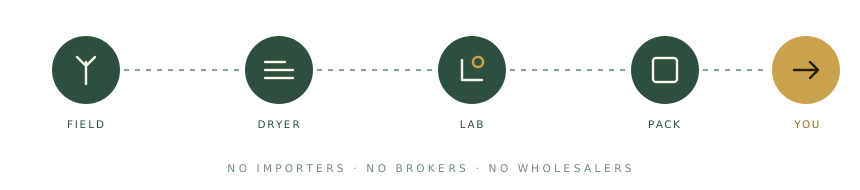
We own the chain end to end. We grow it, dry it, mill it, test it, import it and sell it. That removes four margins from the price, and we split the difference with you rather than keeping it. It also means when something is wrong, there is exactly one company to ask — and we can trace any pouch back to a field and a harvest date.